
Garage Door Repair
The catch-all call. Door will not open, will not close, opens halfway, or something snapped. We diagnose the whole system rather than swapping the first broken part we see.
Read moreEST. 2011 Evanston, Illinois
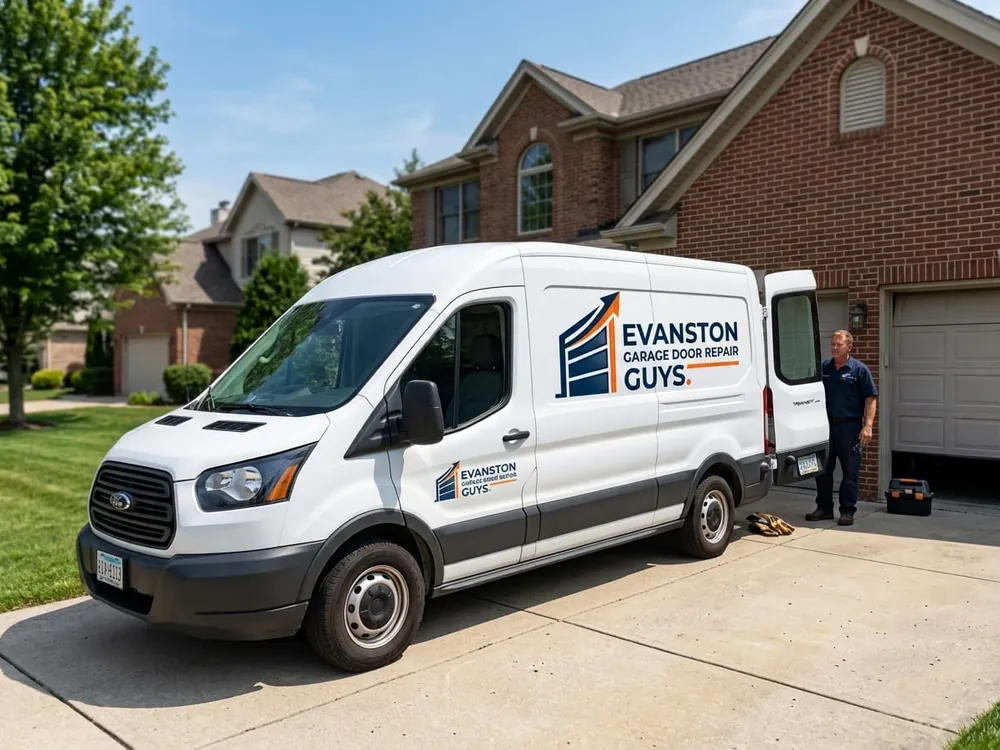
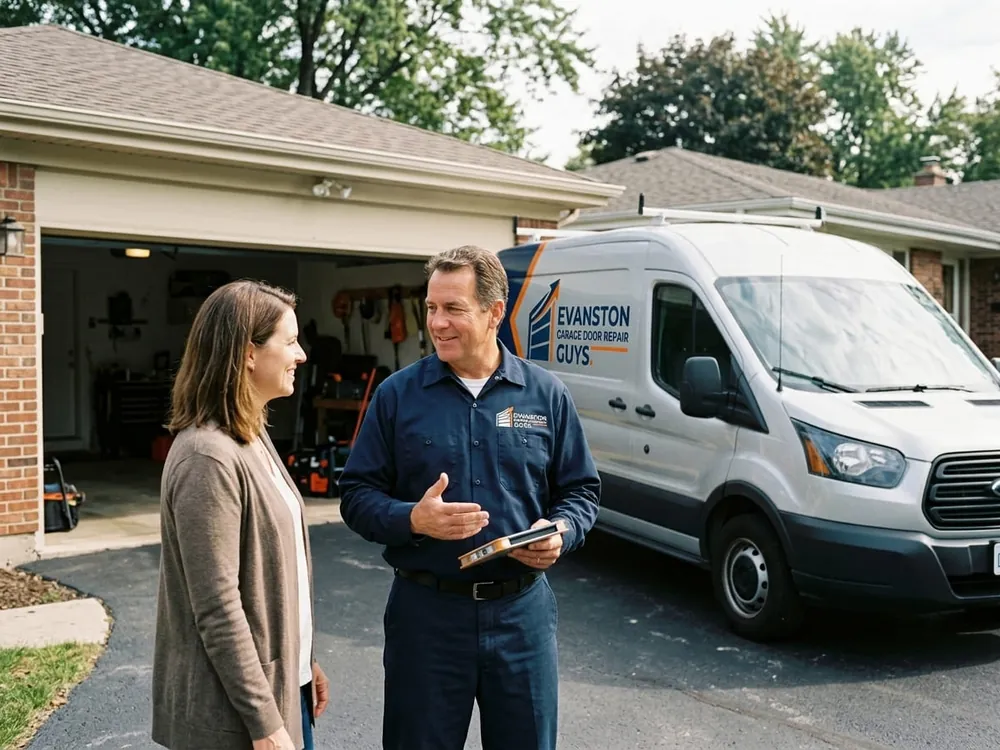
Four in ten Evanston homes were built before 1940, and most of them park behind a detached garage on an alley. We have spent fifteen years learning what that does to springs, tracks and bottom rails — and we carry the parts for it on the van.
01 Why we know this market
The city keeps more than 300 unpaved alleys graded each spring to knock out the ruts and standing water that build up behind them. If your garage opens onto one of those, you already know what it does to a door: the slab shifts out of level, one side of the track picks up load the other side does not, rollers start to bind, and the bottom rail sits in water every time it rains hard.
Add the housing stock. The Census puts 40% of Evanston homes before 1940 and around 70% before 1970. That means original eight-foot openings, low headroom under old rafters, and header framing that has been carrying a door for eighty years. Half the national playbook for garage door repair simply does not apply.
We built this business around that, not around easy new-build work in the far suburbs. Read more about how we started, or go straight to our repair service.
01b The Evanston picture
of Evanston housing units were built before 1940 — the narrow-opening, low-headroom era.
unpaved alleys the City grades each spring to reduce ruts and ponding behind garages.
days a year the temperature drops below freezing at the nearest official climate station.
detached garages counted by the City in the Lakeshore Historic District alone.
Sources: U.S. Census Bureau QuickFacts, CMAP community data, City of Evanston alley maintenance, NOAA 1991–2020 climate normals and the City's Lakeshore Historic District resource inventory.
02 What we fix
Fifteen things we get called about, from a spring that let go at 6am to a full replacement door on a 1920s detached garage. Every one is its own page, because every one is a different job.
The catch-all call. Door will not open, will not close, opens halfway, or something snapped. We diagnose the whole system rather than swapping the first broken part we see.
Read moreThe most common failure in a Chicago-area winter, and the one you should not attempt yourself. Torsion and extension springs, matched to your door's actual weight.
Read moreMotor runs and nothing moves, door reverses on the way down, remote works but the wall button does not. Usually cheaper to fix than to replace.
Read moreNew doors on old openings, including the awkward 1920s sizes nobody stocks. We measure headroom, backroom and side clearance before we quote anything.
Read moreWhen a repair is throwing money at a door that has already failed twice. We will tell you honestly which side of that line you are on.
Read moreBelt drives for attached garages, wall-mount jackshaft units for old detached garages with no ceiling room to give away.
Read moreDoor stuck open overnight, car trapped inside, or a spring that went off like a shotgun. Call and we will tell you truthfully when we can be there.
Read moreFrayed, snapped, or jumped off the drum. Cables fail quietly for months before they fail loudly, and they take the door out of level when they do.
Read moreSteel rollers with worn bearings are the number-one cause of a garage door that sounds like a freight train at 6am.
Read moreBent, spread, or knocked out of plumb — usually by a bumper, sometimes by a settling slab in an alley garage.
Read moreOne damaged section on an otherwise sound door. Worth doing when the door is newer, worth reconsidering when it is not.
Read moreThe door that came off its rollers and is now leaning into your car. Stop using the opener and call us before it comes down further.
Read moreBangs, squeals, grinding, or a pop at the top of travel. Each noise points at a different part, and we can usually name it over the phone.
Read moreDetached alley garages, attached two-car garages, coach houses and above-garage ADUs. Different buildings, different hardware.
Read moreCondo parking decks downtown, loading bays on the west side, and rolling steel on Howard Street storefronts.
Read more03 How a call works
We are a call-only shop. There is no form to fill in and no automated quote engine, because you cannot price a garage door properly without knowing what is on the wall.
Tell us what the door is doing and roughly how old it is. Most faults can be narrowed down to two or three causes on the phone, and we will tell you which.
An honest window, not a marketing promise. If we cannot get there today we will say so rather than book you and slide.
Springs, cables, drums, rollers, track, hinges, opener, safety sensors and the door itself. A door is a balanced system and one failure usually has a cause.
You get the fault, the options, and what each one costs before a tool comes out. If the honest answer is that the door is finished, we say that too.
Prefer to see the detail first? Start with the full service list or read why springs break in January.
04 Who turns up
Nate Sorensen grew up in south Evanston, in a house with the standard arrangement: a narrow 1920s garage at the back of the lot, opening onto an alley that flooded. He spent his twenties working for a large north-suburban door company that wanted new-construction sixteen-by-sevens in the far suburbs and treated an odd-sized alley garage as a nuisance call.
In 2011 he and Chris Duvall — who had spent a decade on commercial overhead doors and parking-deck gates — opened their own shop specifically to take the jobs that outfit did not want. Fifteen years later that is still the business.
05 Where we work
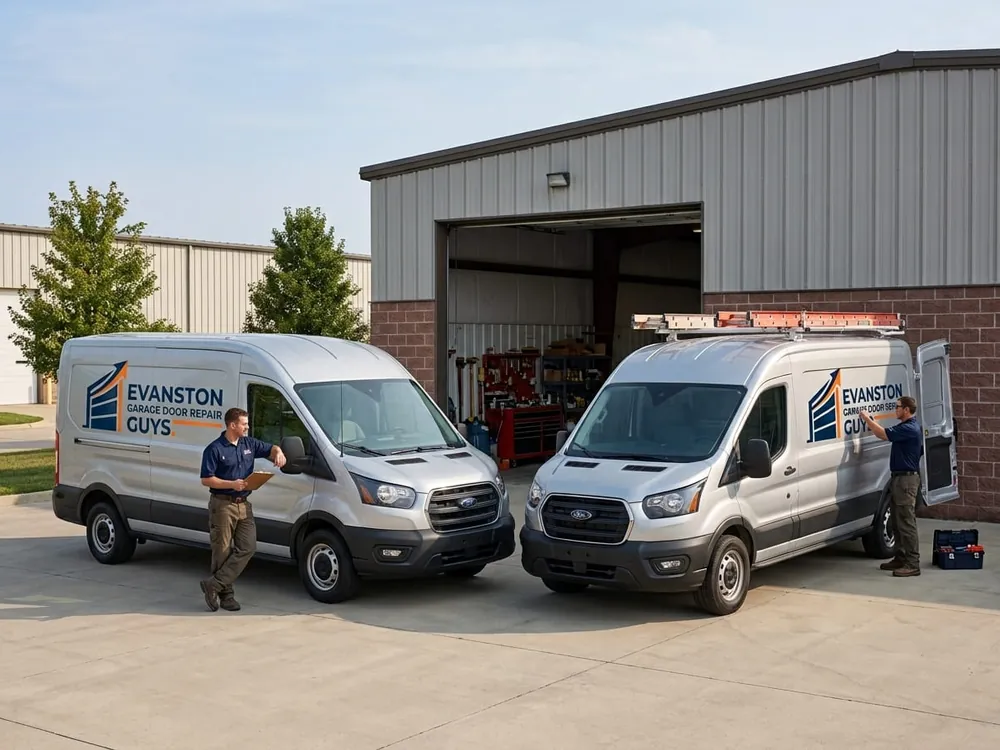
We are not a franchise covering half of Illinois. Our whole service map fits inside about ten road miles of the shop, which is the only honest way to promise a truck the same day.
06 How we work
Garage door repair has a reputation problem in the Chicago market, and it is largely earned. Here is how we try to be the opposite of that.
A twelve-year-old steel door with one dented section usually needs one panel, not four thousand dollars of new door. We will say so even though the bigger job pays better.
Most people who call about a dead opener actually have a broken spring. The motor is fine — it simply cannot lift an unbalanced door. Diagnosing that first saves you an opener you did not need.
If your garage sits in one of Evanston's landmark districts, exterior work visible from the alley can need review. We will point you at Historic Preservation before you order a door you cannot install.
We do not put a new door on rotten header framing, and we do not band-aid a track that is bent because the slab has dropped. Both come back, and they come back worse.
Door weight, headroom, backroom, drum size and spring cycle rating all change the number. Anyone quoting a firm price sight-unseen is either guessing or planning to revise it in your driveway.
Photo-eye sensors and auto-reverse are not optional extras. We test both on every visit, and we follow the DASMA safety guidance on force settings rather than turning them up to hide a mechanical fault.
06b Winter, specifically
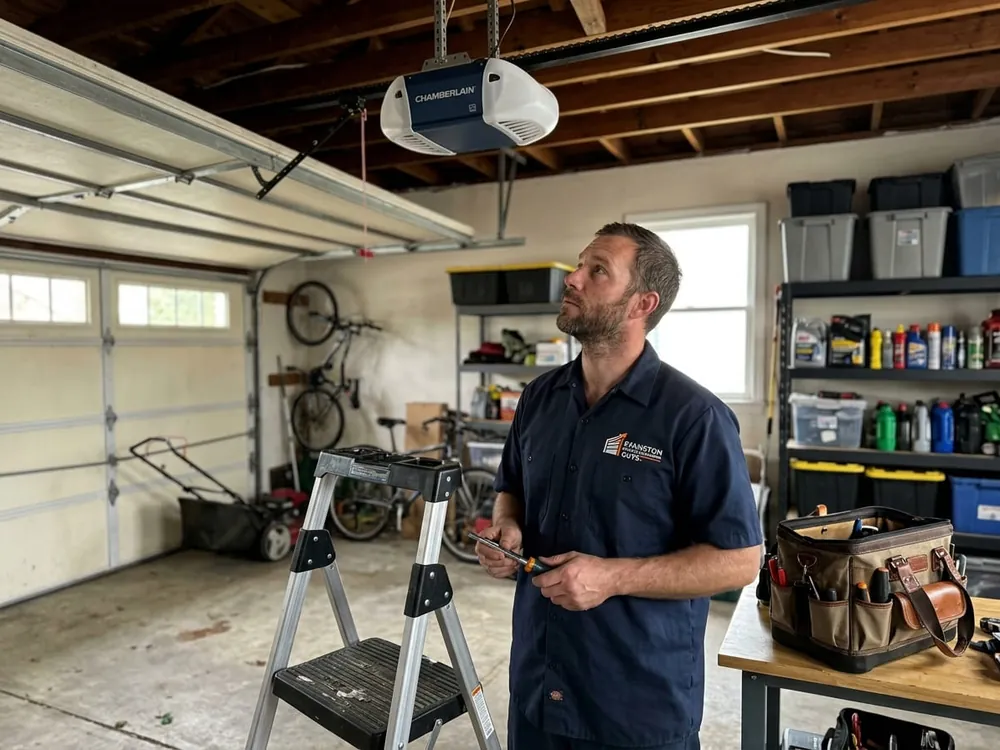
The nearest official climate station records 121 days a year with a low at or below freezing and an average January high of 31.6°F — meaning the temperature crosses the freezing point and back again through most of midwinter. That cycle is what wrecks garage doors here. Water gets under the bottom seal during a thaw and freezes the door to the slab overnight; the opener then tries to tear it free and strips a gear or bends the top section.
Then there is salt. Evanston reported spreading 3,377 tons of granular salt and 52,616 gallons of brine across 190 miles of road in one recent winter. Every bit of that comes home on your tyres and boots into an unheated detached garage, where it sits on springs, hinges, rollers and bottom brackets.
None of it is unusual, and none of it is your fault. It just means a door here needs looking at more often than one in a milder market. We wrote up the full picture in our winter maintenance guide.
07 Questions we get asked
The questions we answer most often on the phone, written out properly.
08 From the workshop
No listicles. These are the explanations we end up giving in driveways, written down properly so you can read them before you call anyone.
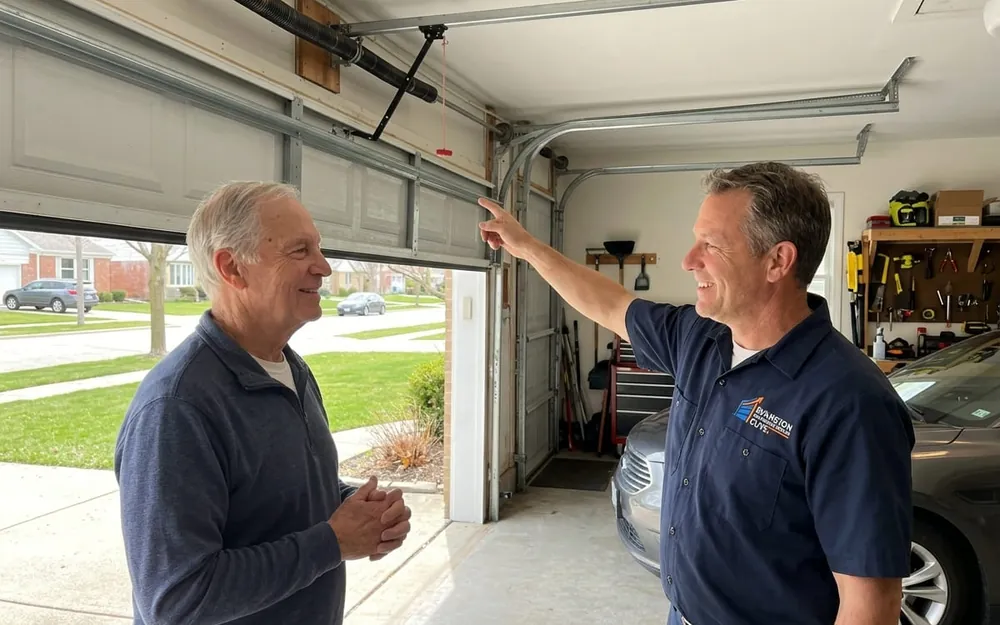
The City grades more than 300 unpaved alleys every spring. Here is what standing water, ruts and a settling slab actually do to the door at the end of your lot — and the right order to fix it in.
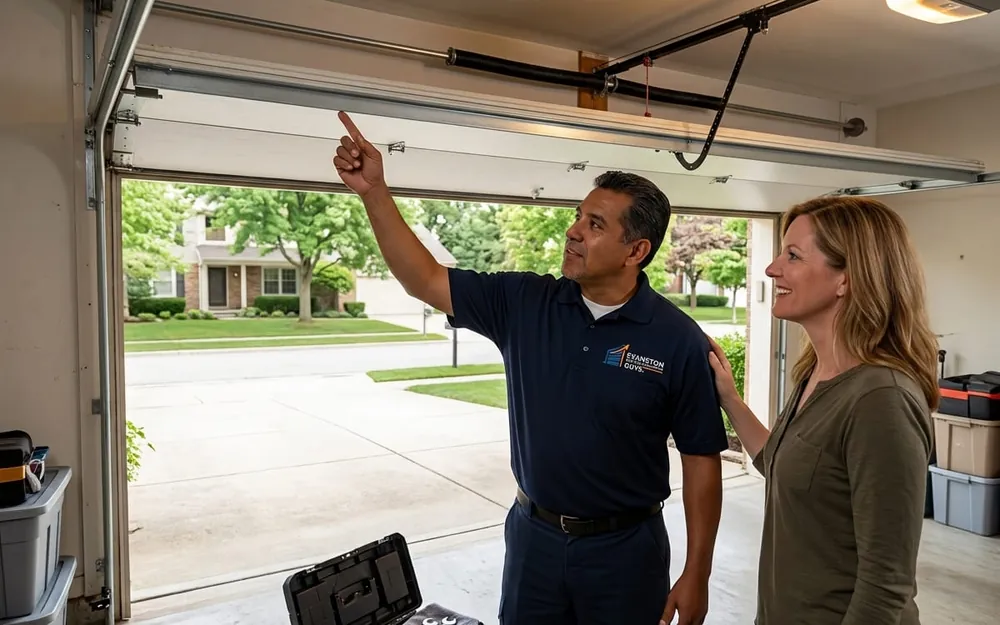
Four in ten Evanston homes predate 1940, and their garages have eight-foot openings and almost no headroom. Here is how to measure yours properly, and what actually works when the ceiling is in the way.
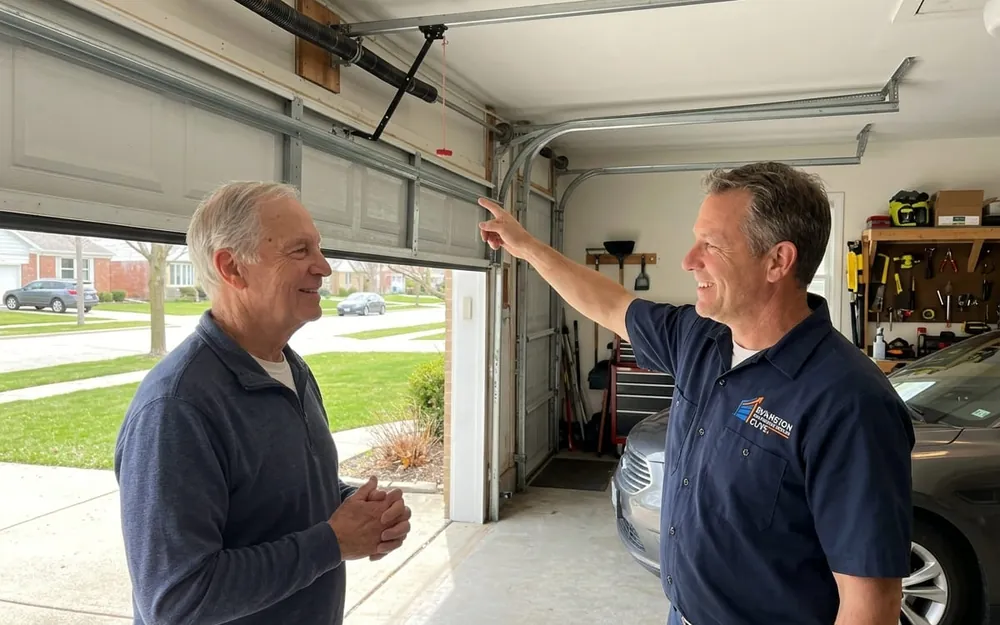
There is no salt air on Lake Michigan — it is fresh water. The corrosion problem here is the 3,377 tons of road salt Evanston spreads each winter, and it arrives in your garage on your own tyres.
One call reaches the people who will actually be doing the work. Tell us what the door is doing and we will tell you straight what it needs — and when we can get a truck to you.